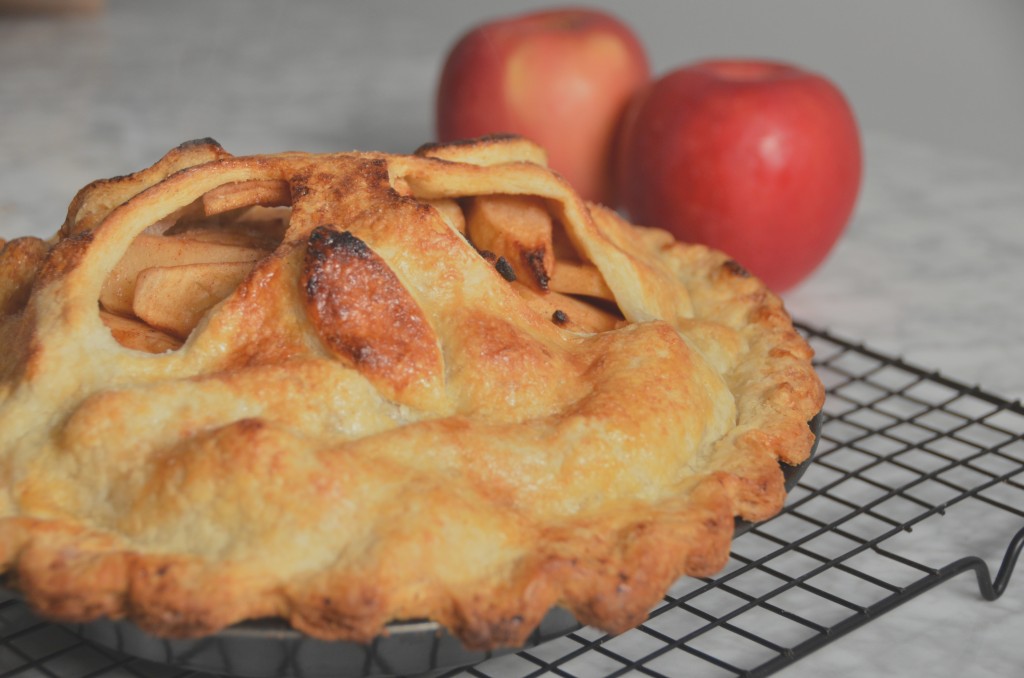
There are two things I love about pie - the pastry and the filling.
Ok, so I love everything about pies! After all, what’s not to love? What could be better than a warm, flakey crust that breaks gently under your fork paired with a warm sweet fruit filling? It’s a dessert that pleases your heart as much as your taste buds. It’s sort of the chicken noodle soup of the dessert world.
If I had to choose which is more important to me in a pie, the pastry or the filling, I’d probably be forced to go with the pastry (although the two components truly are inseparable). I like a pastry made of butter, rather than shortening. The butter gives the pastry great flavor and a crisp texture. Shortening does make a flakey crust, but I can’t go without the flavor of butter. Sometimes I do compromise, however, and accept a pastry made of both.
The rule to making pastry is simple – keep everything cold. The goal is to work butter into the dough without completely blending it into the flour. In a finished pastry, you should still be able to see chunks of butter. Those patches of butter will separate the proteins in the flour when baked, making it more like flaky pastry than chewy bread. By keeping the butter cold, you run less risk of blending it into the flour. By using ice-cold water, you also increase your chances of keeping the butter in small chunks.
How the pastry is baked is critical. It’s easy to get the top crust to look perfectly golden brown, but it’s the bottom crust that needs help cooking through and crisping up. It is the bottom crust after all that is sitting at the bottom of a pie pan with moist fruit filling piled on top. You can see how it would be a challenge to ensure the bottom crust is cooked through and has that prized pie texture. There are a few things a home baker can do to get the pastry cooked properly on the bottom of a pie. Continue reading »