Feb 262012
 

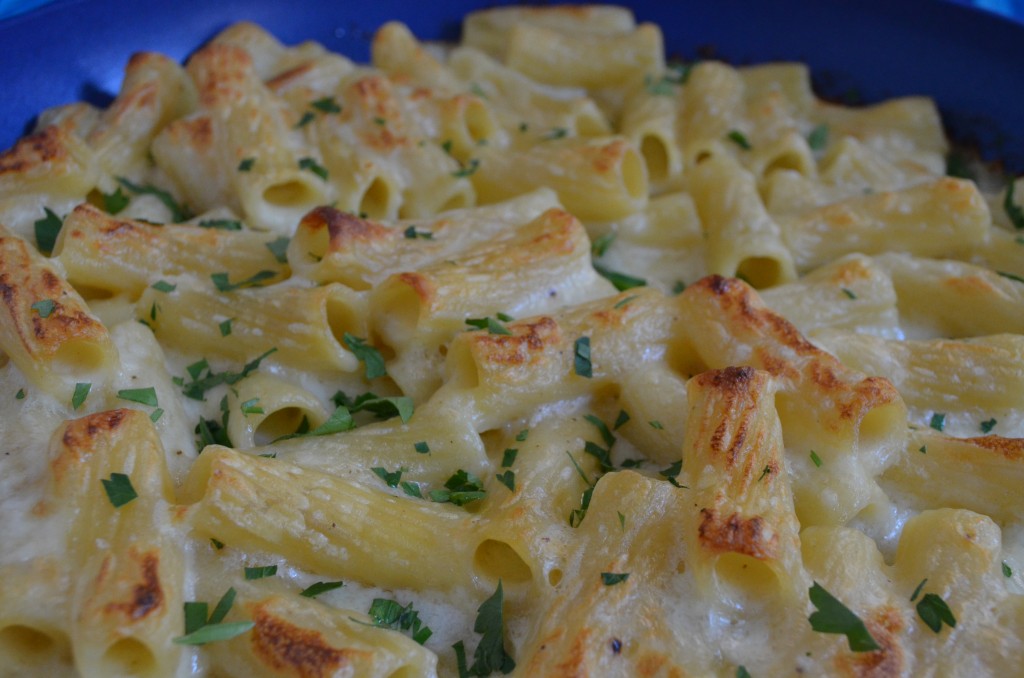
Baked rigatoni with brown edges and parsley sprinkled on top

I was waiting in the grocery store line the other day, and my eyes were drawn to all the covers of the food magazines by the checkout. There were only about four different magazines in the rack next to my cashier (none of them were leading food publications), but I noticed they all had a common theme. Not only were they all promoting comfort food (must be the time of year), but every cover in the rack showed a big plate of pasta. It made me think. Is pasta the quintessential comfort food? I guess that all depends on where you’re from and what makes you feel warm and fuzzy. I tend to think of a roast leg of lamb and yorkshire puddings, but I started asking friends what they considered their comfort food. I have to confess, pasta came up frequently. So, I guess these journalists had done their research.

Those magazine covers forced warm thoughts of pasta into my mind. I do love pasta. There was a time in my life when I had pasta several times a week. It was inexpensive and very versatile, acting as the vehicle for many different flavors and ingredients. I didn’t think it very special then. I suppose because I now don’t eat pasta that often, I find myself reminiscing about pasta and sometimes truly craving a big bowl of rigatoni or cavatappi (two of my favorite pasta shapes).

I was at university when I first really started cooking . In the summer or during the Christmas break when I visited my parents, I would sometimes go through my mother’s cookbooks looking for new (to me) things to make. One book that I particularly loved was Diane Seed’s The Top One Hundred Pasta Sauce Recipes. It was from this book that I first made one of my favorite pastas to date - Pasta Putanesca.

Pasta Putanesca is a quick tomato-based sauce, made with anchovies, garlic, chili flakes, capers, black olives, tomatoes and parsley. Some of you might turn your nose up at the mention of anchovies, but don’t. The anchovies don’t impart their own flavor as much as they season the sauce with a salty meatiness that can’t really be achieved any other way. Pasta Putanesca literally translates as “whore’s pasta”, and there are several folk tales about the origin of the name. The most common is that the Putanesca sauce is so quick and easy to make that ladies of the evening would have time in between clients to whip up a batch for dinner, plus the aroma of the sauce would waft out into the streets luring men into their ummm… “lodgings”. All the flavors in this pasta sauce certainly are vibrant and it will fill your kitchen with a fantastic and alluring aroma. As such, Pasta Putanesca is definitely a common favorite among pasta lovers. As for whether or not it is “comfort food”, well, I guess that depends on where you’re from and what makes you feel warm and fuzzy. 😉

Here’s a recipe for the notorious pasta. If you’d like to see it made, tune into QVC on March 7th at midnight, 7:55am, noon or 9pm (all ET) in a very special new product from the Technique® line of cookware.

Pasta Putanesca
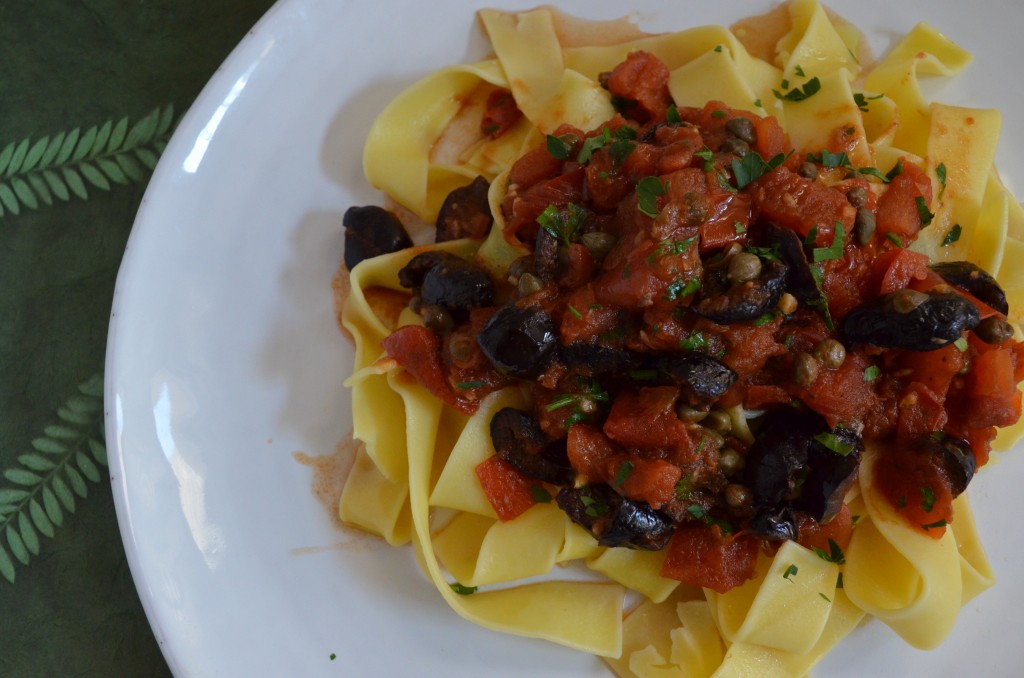
Papparelle with Putanesca sauce on top on a white plate on a green placematServes 2

Ingredients:

  • 1 tablespoon olive oil
  • 4 fillets anchovies, chopped
  • 1 clove garlic, minced
  • 3 tablespoons capers, rinsed
  • ½ cup black olives, pitted and halved
  • ½ cup canned diced tomatoes
  • 1½ cups chopped fresh tomatoes
  • ¼ pound dried pappardelle
  • salt
  • freshly ground black pepper
  • 2 tablespoons chopped fresh parsley
  • grated Parmigiano-Reggiano cheese (optional)

Directions:

  1. Bring a large stockpot of water to a boil. Salt the water.
  2. Pre-heat a 10-inch nonstick sauté pan over medium-high heat.
  3. Add the olive oil and sauté the anchovies and garlic for a minute. Add the capers and olives and toss. Add the tomatoes (canned and fresh) and toss again. Let this cook for 5 minutes.
  4. Drop the pappardelle into the pasta water and cook according to the package directions until the pasta is al dente. Drain the pasta and transfer to a warmed serving dish.
  5. Season the sauce with salt and freshly ground black pepper and toss in the parsley. Pour the sauce over the pasta and serve with Parmesan cheese if desired.
Feb 122012
 
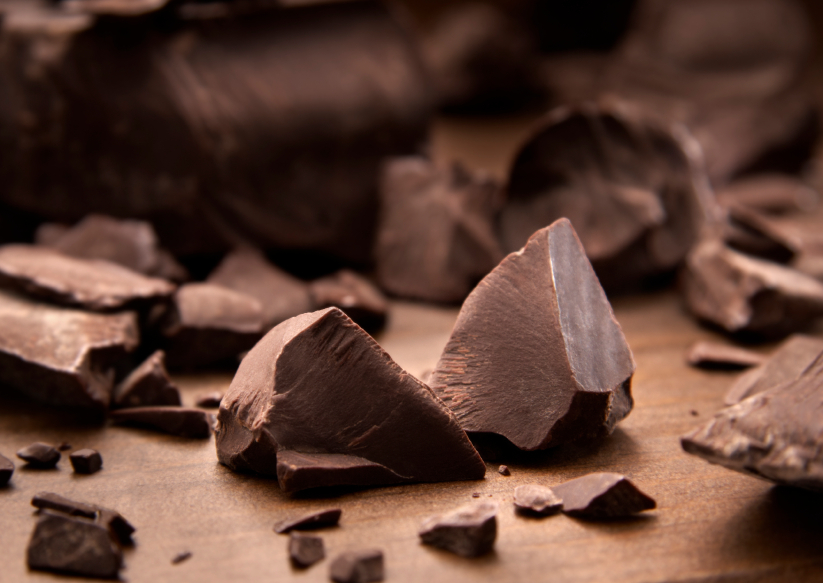
chunks of dark chocolate on a wooden board

photography by Janine Lamontagne

This coming Tuesday, February 14th, is the day we celebrate… chocolate! Well, I suppose Valentine’s Day is supposed to be a celebration of Love, but so many of us seem to celebrate love with chocolate, so I prefer to think of it as a celebration of the love of chocolate. With that said, Tuesday is no different for me than any other day of the year!

I’ve loved chocolate ever since I can remember eating. I remember all the Easter chocolate eggs I received as a kid. I remember the chocolate letter “M” I was always given at Christmastime. I remember sneaking chocolate chips out of the old coffee tin where they were stored whenever I could get away with it (read here). I remember my Great Auntie Nelly giving me a super large Toblerone bar when I was four and my mother finding me sick in the bathroom an hour later after I’d finished the whole thing in one sitting. I still love Toblerone bars. I love chocolate. Always have. Always will.

These days, I always have a stockpile of chocolate in my house. Some of it I keep in the basement, hoping that I’ll forget that it’s there most of the time, but remember that I have it in times of emergency (which would be any time that I can’t find chocolate in my house). The chocolate that I keep in my kitchen is high end dark chocolate for the most part. Why dark chocolate? Well, because I love chocolate more than I love sugar. Dark chocolate has less sugar and more actual cocoa than milk chocolate. In fact, by FDA regulation, dark chocolate must have at least 35% chocolate liquor (the ground or melted nib of the cocoa bean) whereas milk chocolate only needs to have 10%. The rest of the chocolate is made up of sugar, cocoa butter and sometimes milk. The dark chocolate that I prefer usually has at least 75% chocolate liquor. I’m serious about my cocoa solids! I like a little bitterness in chocolate, more than a milky creamy chocolate flavor. To each his or her own (but don’t think I ever turn down good quality milk chocolate!).

My love of chocolate has made choosing a dessert off a menu very easy. The first glance at the menu simply zooms in on what chocolate options are present. There is always one and usually no more than two. That makes decision-making super easy. Here’s a recipe for one of the most classic chocolate desserts that happens to be a favorite of mine. Great for Valentine’s Day or, if you’re like me, any day of the year.

Chocolate Espresso Mousse

(from Blue Jean Chef: Comfortable in the Kitchen)

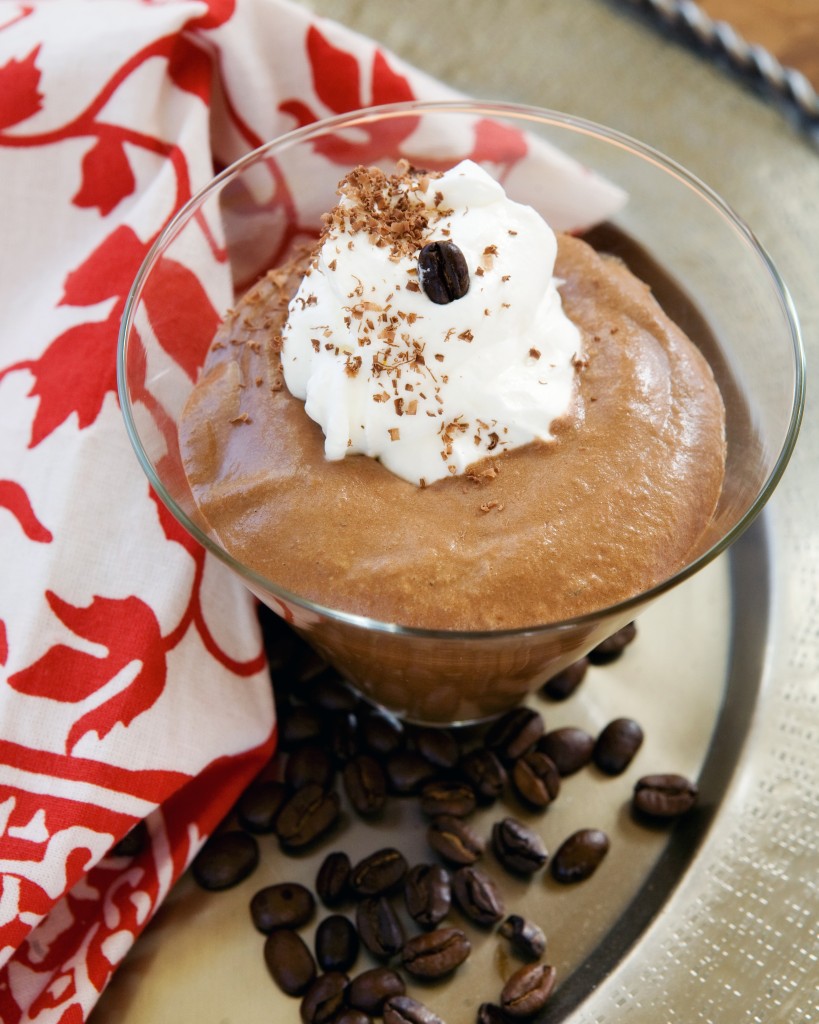
a martini glass with chocolate mousse, whipped cream and espresso bean on a metal tray with a red and white napkin

photography by Jessica Walker

Serves 4

Ingredients:

  • 4 ounces bittersweet chocolate, chopped
  • 2 tablespoons butter
  • 2 egg yolks
  • ½ teaspoon pure vanilla extract
  • 1 teaspoon instant espresso powder
  • 2 egg whites
  • 4 teaspoons sugar
  • ½ cup heavy cream, plus more for garnish
  • 2 tablespoons sugar
  • espresso beans, for garnish

Directions:

  1. Melt the chocolate and butter together in a double boiler or in a bowl in the microwave. Let the chocolate cool slightly. Add the egg yolks to the chocolate one at a time, beating well between each addition. Add the vanilla extract and the instant espresso powder and mix well.
  2. Whip the egg whites to soft peak stage (when the egg whites will almost stand up on their own at the end of the whisk – looking like a chocolate kiss). Add the sugar and beat again until glossy.
  3. In a separate bowl, whip the heavy cream until it reaches soft peaks.
  4. Fold the egg whites into the chocolate mixture carefully, trying not to deflate the egg whites too much. Then, fold in the whipped cream and combine gently until no more streaks of white appear.
  5. Transfer to individual serving bowls or glasses. Refrigerate for 30 minutes, and then serve garnished with a dollop of whipped cream and an espresso bean or two. If you make the mousse ahead of time and store it in the refrigerator, let it sit on the kitchen counter for 20 to 30 minutes before serving.


Feb 052012
 

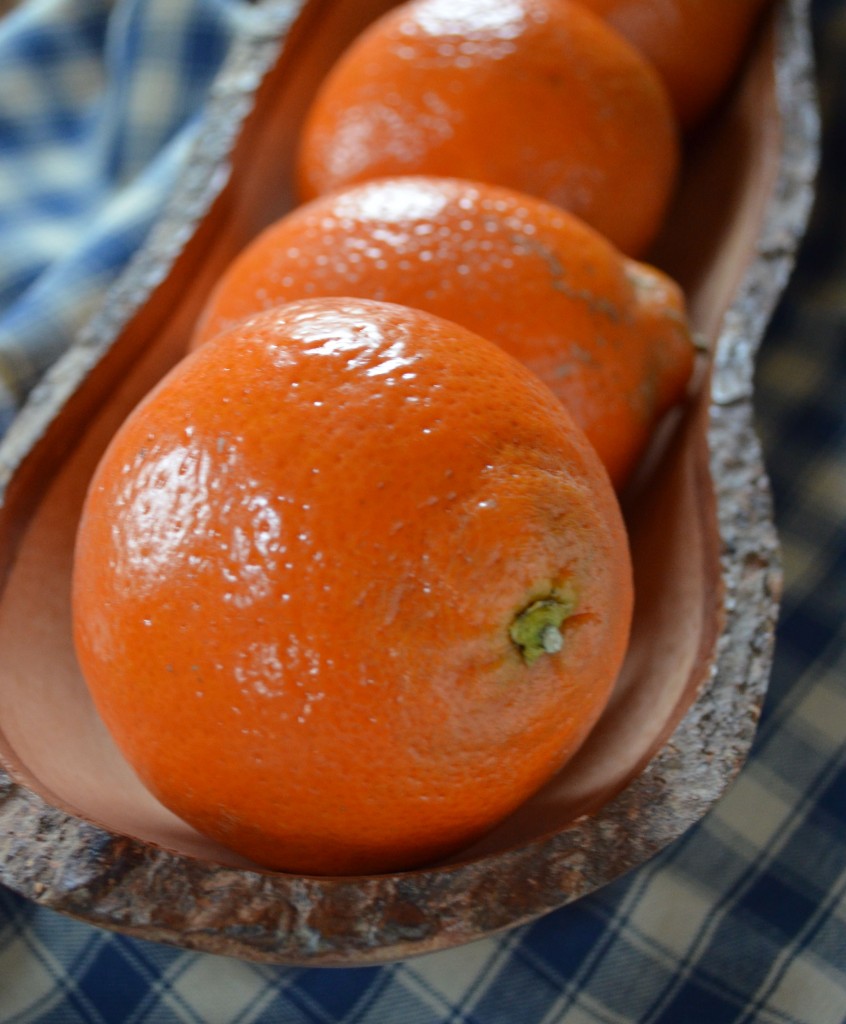
a row of Honeybells in an oval wooden bowl on a blue and cream checked cloth

If I ever get the winter blues, it happens in February. February can be cold. February can be gray and dirty from salt and sand on the roads. February is after all the fun of the holidays. In February the novelty of winter has worn off. February is a long way from April and May. Now, I know it’s only just the beginning of February, but I’m already on alert for the blues. Truth be told, we’ve had a pretty mild winter so far in the East. There have been a few cold days, but many mild days mixed in there. Even up in Ontario, Canada where I spend some of my time, the temperatures are cooler, but there’s hardly any snow on the ground. Trouble is, it’s not the cold or the snow that gets me down in the winter. It’s the lack of sunshine. If several gray days are strung together, I find my mood gets lower and lower and I long for spring and sunshine.

Last week, however, a little sunshine arrived in the mail. A case of Cushman’s Honeybells was left on my doorstep! The timing of these delicious fruit - a cross between a Dancy Tangerine and a Duncan Grapefruit - is perfect. In January and February, right when I need a little sunshine, is exactly when the Honeybell is in season. Of course, some of my Honeybells went straight into a glass as some of the most delicious citrus juice I have all year. Others I quartered and ate over the sink as the juice spilled out everywhere. The joy of getting a case of Honeybells is that you can enjoy some as is and still have more left over to make something interesting. In years past, I’ve made marmalade with my Honeybells (click here for a recipe, or here to read more about Honeybells), but this year I decided to do something a little different and less time consuming.

This year’s Honeybell recipe is for a granita - a dessert fruit ice. I made Honeybell Mint Granita for dessert for some friends. We had it after some spicy Indian food, and it was so refreshing and delicious - a perfect end to a great evening. A little sunny end to a gray day in February. The only thing missing from the evening - the blues.

Honeybell Mint Granita

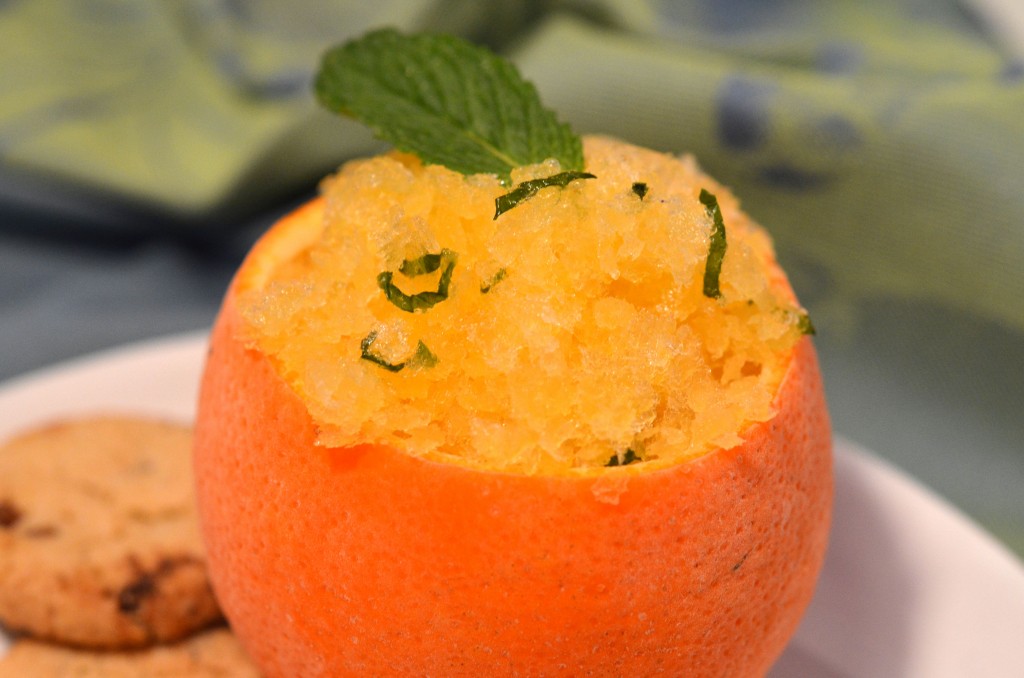
honeybell granita in a hollowed out honeybell peel on a white plate with two cookies on the side

Serves 4 to 6

Ingredients:

  • 6 Honeybells (about 3½ cups juice)
  • sugar (if needed to taste)
  • 2 tablespoons orange liqueur (Grand Marnier)
  • 2 tablespoons mint (or basil), thinly sliced (chiffonade)

Directions:

  1. If you want to serve the granita in the orange skins, slice the tops off the Honeybells and hollow out the inside with a grapefruit knive or spoon. Do this over a strainer over a bowl so that you can catch all the insides of the Honeybell, along with the juice. Press the Honeybell pulp in the strainer to extract as much of the juice as possible. Chill the hollowed out orange peels in the freezer.
  2. If you are just making the granita to serve in martini glasses or small bowls, slice the Honeybells in half and juice them. You should end up with about 3½ cups of juice.
  3. Add sugar only if needed to sweeten the juice. Stir in the orange liqueur and the mint and pour the mixture into a shallow baking pan. The liquid should be no more than 1 inch deep. Place the pan in the freezer and let it solidify for one hour.
  4. Remove the pan from the freezer and scrape it with a fork or spoon to break up what has frozen. Return it to the freezer for another hour. Repeat the scraping and return it to the freezer for another hour. Do this until the granita is the desired consistency - flakes or granules of ice.
  5. Serve in the hollowed out orange peels or in martini glasses with a sprig of mint on top.