Jan 222014
 

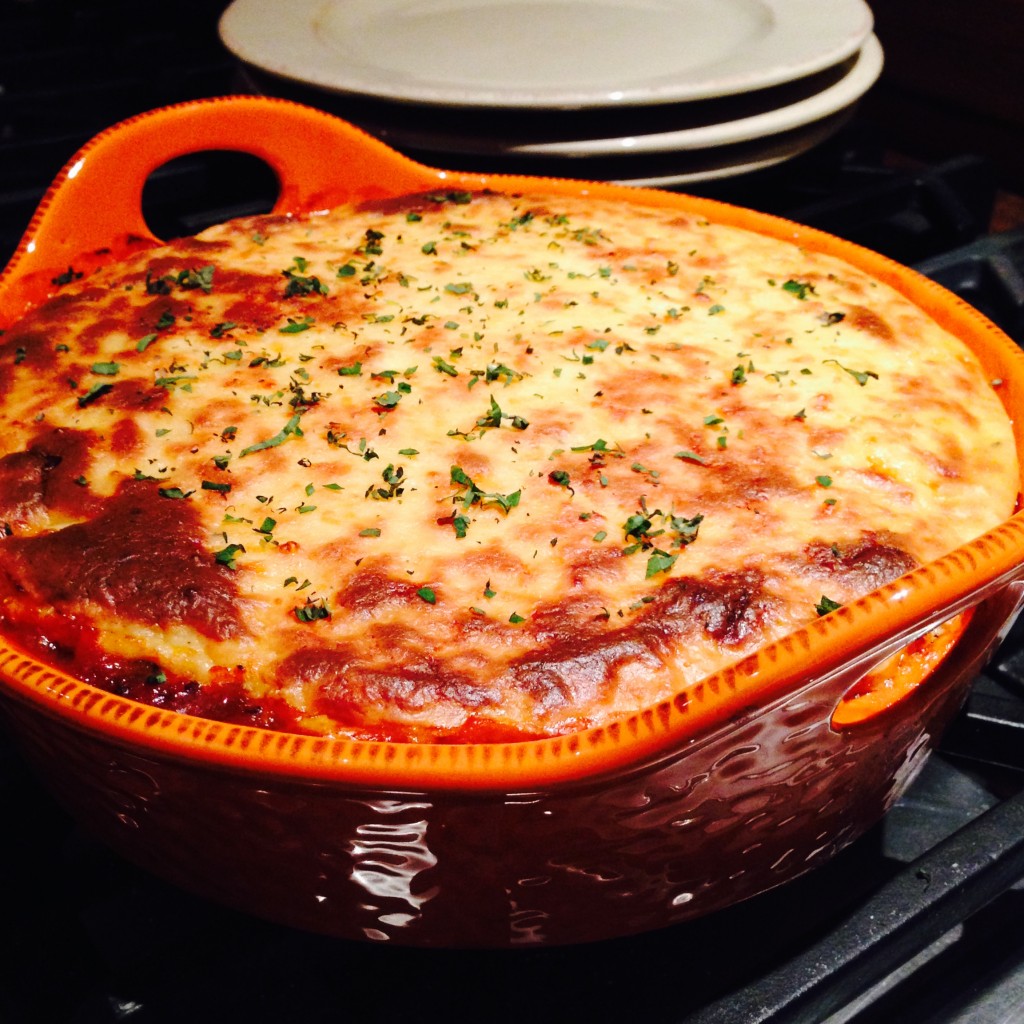
A large round orange ceramic dish with Moussaka in it. A stack of plates in the background

It’s rare that I find a vegetarian version of a classic dish that I like as much as the original version, but this is one of those rare occasions! This version of the Greek classic, Moussaka uses portobello mushrooms instead of beef and it’s delicious. There’s a hint of cinnamon, but not so much to be overwhelming. It’s a not a recipe for those who don’t really like to cook, for the prep involved in putting the Moussaka together has several steps, but served with a Greek salad, it makes a perfect meal for a cold winter day.

Vegetarian Moussaka

Serve 4 to 6

Ingredients:

  • 1 large eggplant, sliced into ½-inch rounds
  • ¼ cup crumbled feta cheese
  • ¼ cup grated Parmesan cheese

Sauce:

  • 2 tablespoons olive oil
  • 1 onion, finely diced
  • 2 carrots, finely diced
  • 2 ribs celery, finely diced
  • 2 cloves garlic, minced
  • 12 ounces Crimini or Portobello mushrooms, chopped
  • 1 teaspoon dried oregano OR 3 tablespoons chopped fresh oregano leaves
  • 1 teaspoon ground cinnamon
  • 1 teaspoon salt
  • ¼ teaspoon crushed red pepper flakes
  • ¼ cup white wine (optional)
  • 1 28-ounce can crushed tomatoes

Topping:

  • 2 tablespoons butter
  • ¼ cup all-purpose flour
  • 1½ cups whole milk
  • 1 cup grated Parmesan cheese
  • ¼ teaspoon ground nutmeg
  • salt and pepper, to taste
  • 1 egg, lightly beaten

Directions:

  1. Prepare the eggplant slices by sprinkling salt on both sides, and placing the slices onto a paper towel. Cover the eggplant with another piece of paper towel and set aside for 30 minutes. (This is to help extract some of the bitter enzymes in the eggplant.) While the eggplant is soaking, pre-heat the oven to 400ºF. Brush any extra salt off the eggplant and brush both sides with olive oil. Bake on a baking sheet for 10 minutes, flip the slices over and bake for another 12 to 15 minutes or until the eggplant is tender and cooked through.
  2. Make the sauce while the eggplant is baking. Pre-heat a large sauté pan over medium-high heat. Add the olive oil and sauté the onion, carrots and celery until tender – about 10 minutes. Add the garlic, mushrooms and dried spices and cook for another 10 minutes. Add the white wine (if using) and crushed tomatoes. Cook until the sauce thickens slightly – about 15 minutes.
  3. Make the cheese sauce topping. Pre-heat a saucepan over medium heat. Melt the butter and add the flour, whisking for about 2 minutes. Whisk in the milk and bring the mixture to a boil so that it thickens. Remove the sauce from the heat and stir in the cheese and nutmeg. Season with salt and pepper and let it cool just a little, then whisk in the egg.
  4. Assemble the Moussaka. Place half of the eggplant slices in the bottom of a 2-quart ceramic baker. Pour half of the sauce on top. Sprinkle the Parmesan and feta cheeses over the casserole. Place the remaining eggplant slices on top. Pour the remaining sauce on top. Finally, pour the cheese sauce topping over everything.
  5. Transfer to the oven and bake for 40 to 50 minutes or until the top is golden brown. Let the Moussaka cool for about 10 minutes before serving.


Dec 022013
 

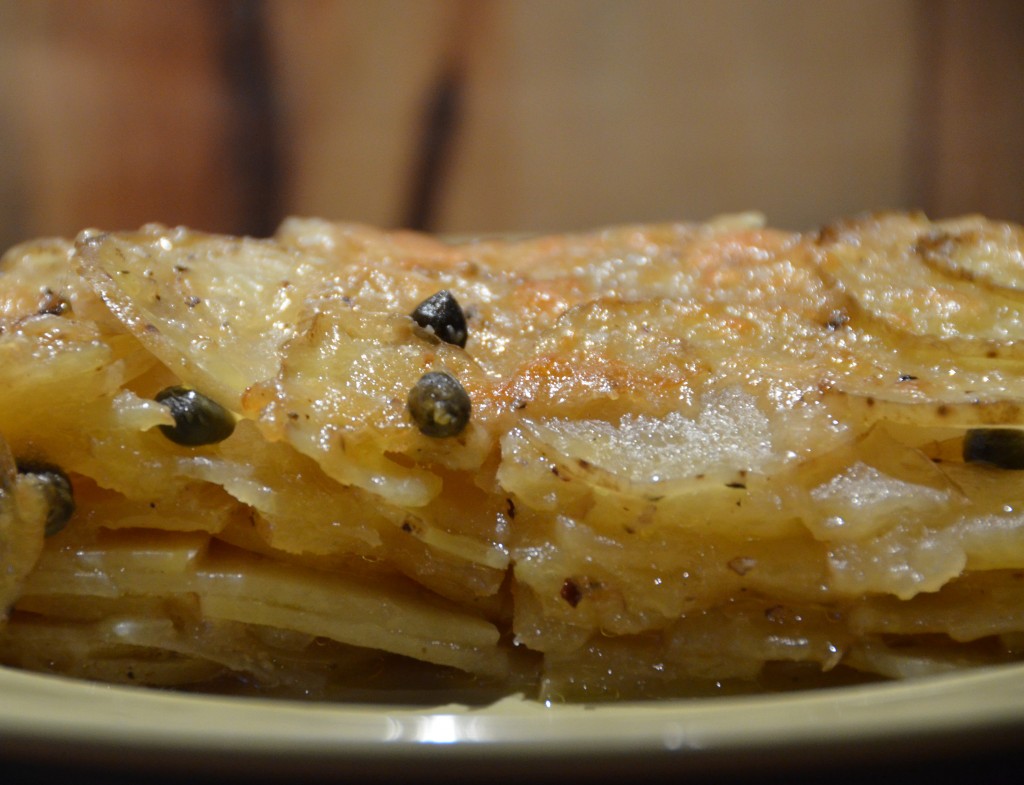
I made this gratin for American Thanksgiving this year and it really stood out to me as a great way to make a gratin without all the milk and cream. It was inspired by a recipe from Bon Appétit magazine and I really loved the briny caper flavor in it. It’s definitely a keeper!

Close up shot of the cross section of a potato gratin. Capers visible

Sicilian Potato Gratin

(Adapted from Bon Appétit Magazine, March 2008)

Serves 4


Ingredients:

  • 1 tablespoon olive oil, plus more for drizzling
  • 1 cup chopped onions
  • 1½ pounds Yukon Gold potatoes, scrubbed and very thinly sliced
  • ¼ cup grated Parmesan cheese (plus a little more for the top of the gratin)
  • ¼ cup finely grated Manchego cheese (or any hard Cheddar)
  • 1 clove garlic
  • 4 tablespoons capers, drained and rinsed
  • 1 cup best-quality chicken stock
  • salt and freshly ground black pepper


Directions:

  1. Pre-heat the oven to 350ºF. While the oven is pre-heating, heat a skillet over medium heat. Add the olive oil and sauté the onions until they are tender, but not browned. This will take about 10 minutes.
  2. Use a mandolin or slicer to slice the potatoes into uniformly thin slices and set aside. Combine the cheeses in a bowl and set aside.
  3. Rub the garlic clove all over the interior surface of a 9-inch square cake pan or ceramic dish.
  4. Start layering the gratin in the following order: 1/3 of the potato slices, salt and pepper, half the onions, 1 tablespoon of capers, and 1/3 of the grated cheeses. Repeat. Repeat one last time without adding the onions (they should be all used up by this point). Pour the chicken stock into the dish and push down on the potatoes firmly. Drizzle a little olive oil over the top and cover with aluminum foil.
  5. Bake for roughly 60 minutes or until the potatoes are tender when pierced with a paring knife. Uncover, sprinkle a little more grated Parmesan cheese on top, and brown the top for another 15 minutes.
  6. Remove from the oven and let it sit for a little while to set up. (You may find that there is some excess liquid in the pan. You can drain that off later.)
Oct 192013
 
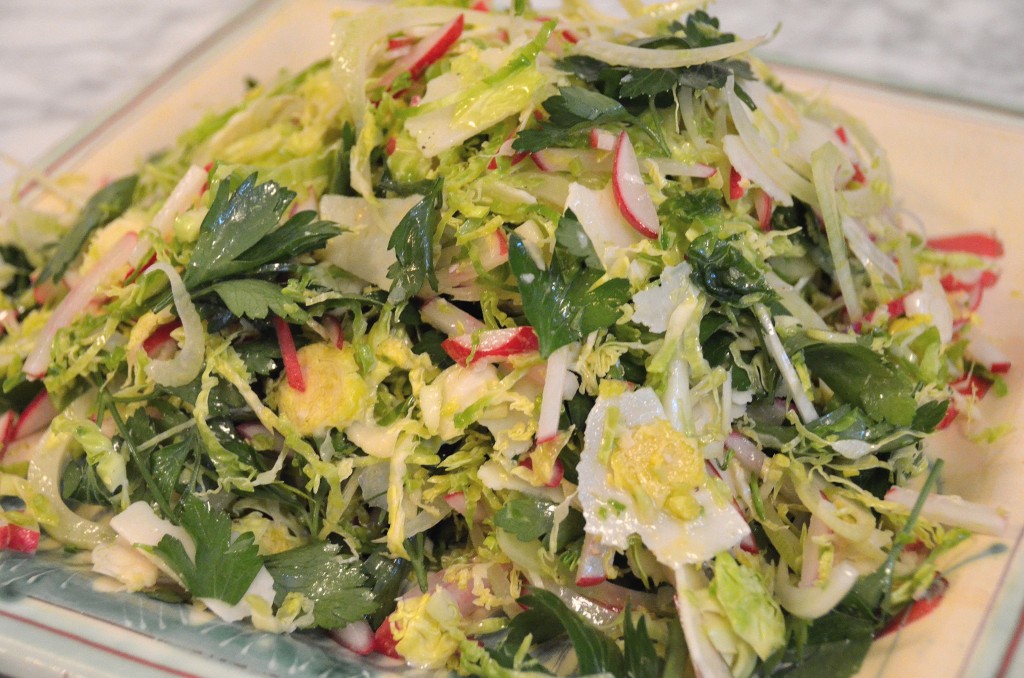
shredded brussels sprouts slaw on a square platter

(missing the red onion, which I was unexpectedly out of when I made this version!)

I served this Brussels Sprouts dish at Canadian Thanksgiving this year. Celebrating Canadian Thanksgiving in October always gives me a chance to try recipes before American Thanksgiving, and this one was a winner. There are so many flavors going on in the Thanksgiving meal, that this cold crisp vegetable salad with salty Locatelli cheese was a refreshing welcome and accompaniment to the mashed potatoes, bread stuffing, cranberry sauce, turkey and gravy. Plus, it’s great in a sandwich the next day. Bonus.


Brussels Sprouts with Fennel, Radishes, Red Onion, Parsley and Locatelli Cheese

Serves 4

Ingredients:

Raw ingredients - radishes, Brussels sprouts, fennel and parsley

  • 1/2 red onion, thinly sliced, soaked in water and rinsed
  • 1 medium bulb fennel, thinly sliced
  • 1 pound Brussels Sprouts, trimmed and thinly sliced
  • 1 cup fresh parsley leaves
  • 1 bunch radishes, julienned
  • Locatelli (or Pecorino) cheese, shredded (as much or as little as you’d like)
  • 1/2 teaspoon Dijon mustard
  • salt and freshly ground black pepper
  • 1 tablespoon white wine or champagne vinegar
  • 3 tablespoons olive oil


Directions:

  1. Slice all the vegetables in very thin slices. Start with the red onion because you should soak the red onion in cold water for at least 20 minutes to take away some of the harsh flavor. You can do this while you slice the other vegetables. Mix the vegetables, the parsley leaves and the Locatelli cheese shavings together in a bowl.
  2. In a small bowl combine the mustard, salt, pepper and vinegar. Blend well to dissolve the mustard and salt. Add the olive oil and check your seasoning, seasoning again if need be. (Remember the Locatelli cheese is quite salty.)
  3. Toss the vegetables in the vinaigrette and serve. This is quite tasty the next day too.


Mar 182012
 

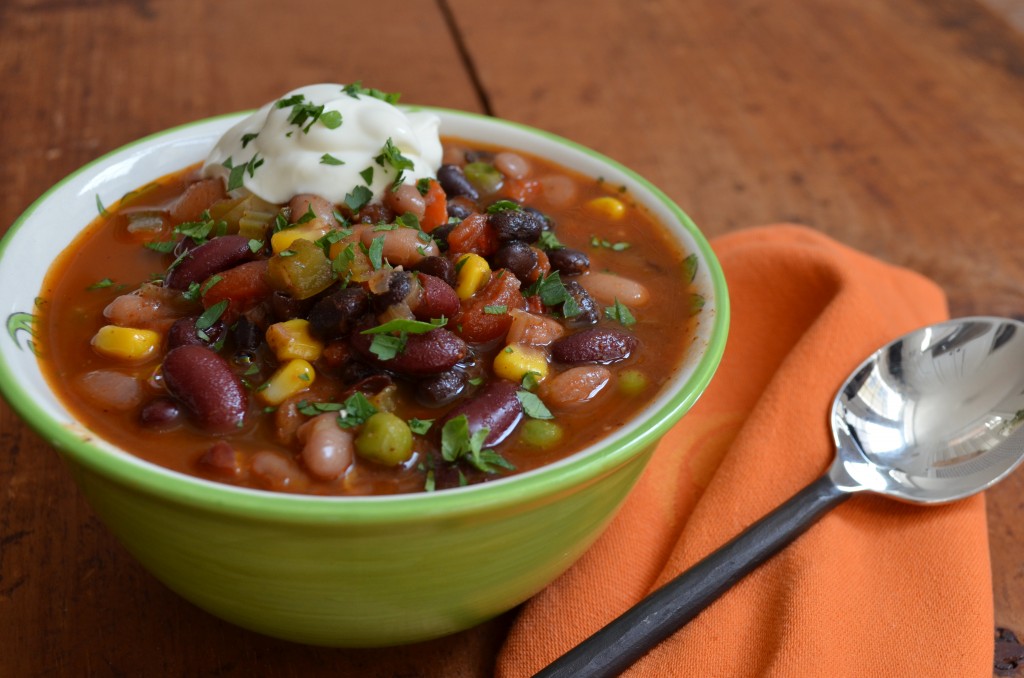
chili in a green bowl on a wooden table with an orange napkin beside it.The weather has been shocking lately! Not just in the Philadelphia area has it been extremely and unseasonably warm for March, but even in France, where my parents live, the weather has made everyone scratch their heads and take off their winter coats. I’ve heard from several people - bus drivers, cab drivers, store clerks - that I shouldn’t get my hopes up, and that Mother Nature often plays cruel jokes at this time of the year. I’ve been told to “expect a blizzard any day now”. Apparently the masses of tulips sprouting up in my garden have not heard this news.

What I cook and eat is affected more by the weather than any other factor in my life. Continue reading »

Dec 182011
 

In just over a week, the biggest holiday of the year will be over. There’s plenty of eating to be done between now and then, however! After all, now’s the time to create the problem for which we need a New Year’s resolution to fix, right? Well, for some maybe… For me, holiday food needs to be comforting, heart-warming, home-y food, but not necessarily meals that leave you regretting your indulgence. Big roasts, slow cooked dishes, or just something different from what we have on a regular night are perfect, and they don’t have to destroy a diet. The holidays should be a time when we can take some time to cook, relax a little, enjoy good friends and good food without remorse.

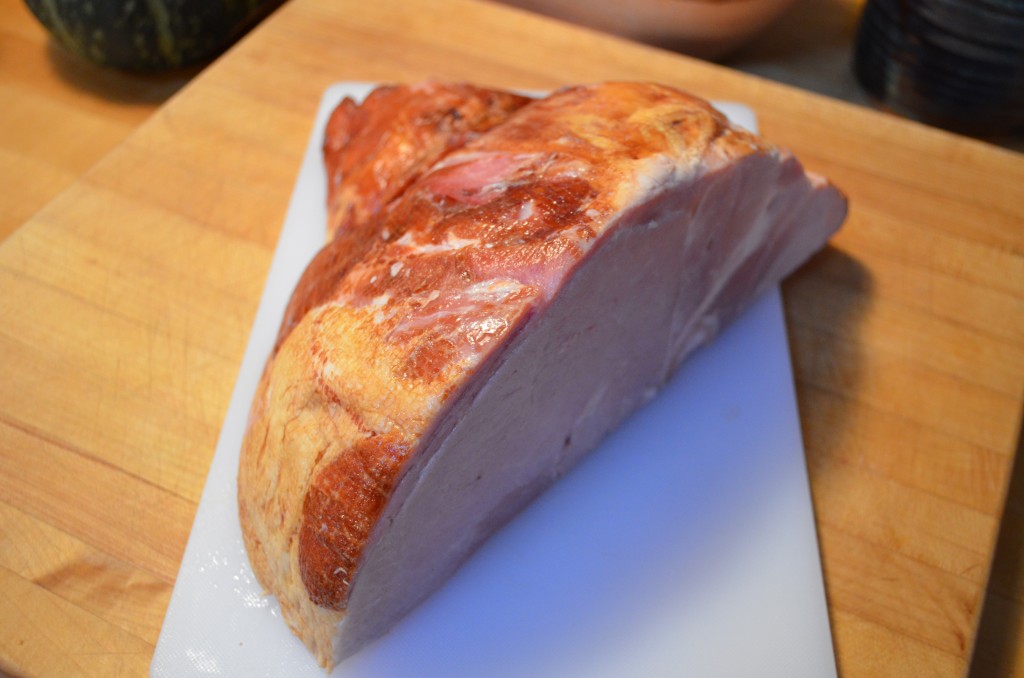
I was up in Canada a few weeks ago, doing just that - celebrating the holidays early with some good friends. We had a delicious holiday meal together that I thought I would share with you. Easy, home-y and yet still special. It started off with a Montreal bone-in ham. It was cured and smoked and looked delicious even before we cooked it!

a cut piece of bone-in ham sitting on a white cutting board, on a wooden counter

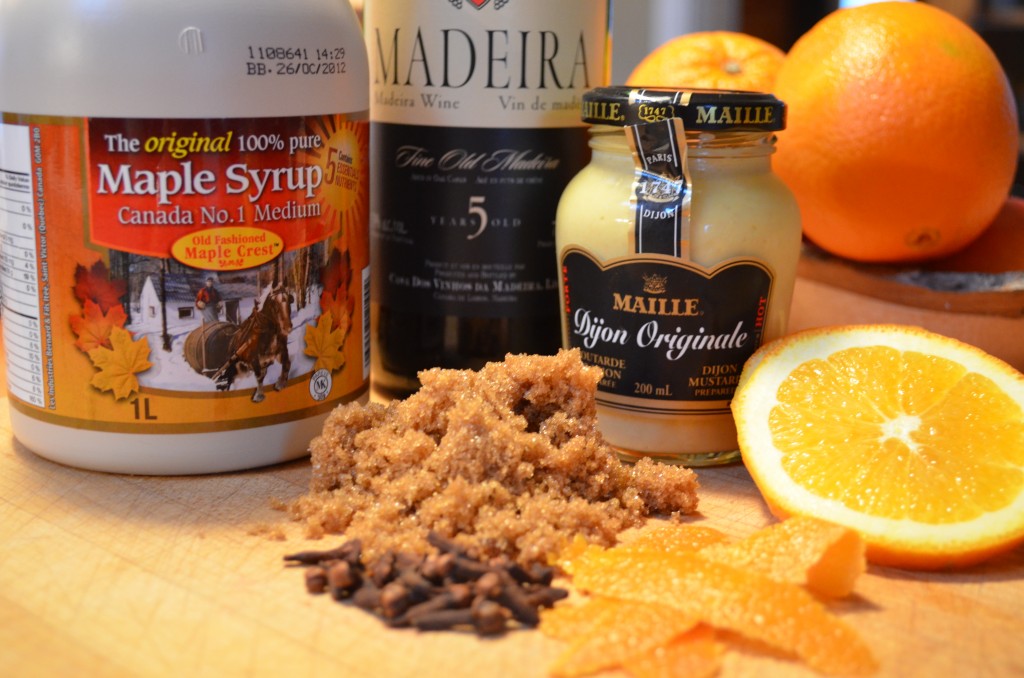
I decided to keep it simple and make a delicious glaze for the ham, score it, brush it, bake it, baste it, and let it rest. I combined Madeira wine, brown sugar, maple syrup, orange juice, Dijon mustard and orange zest for the glaze and the ham was delicious!

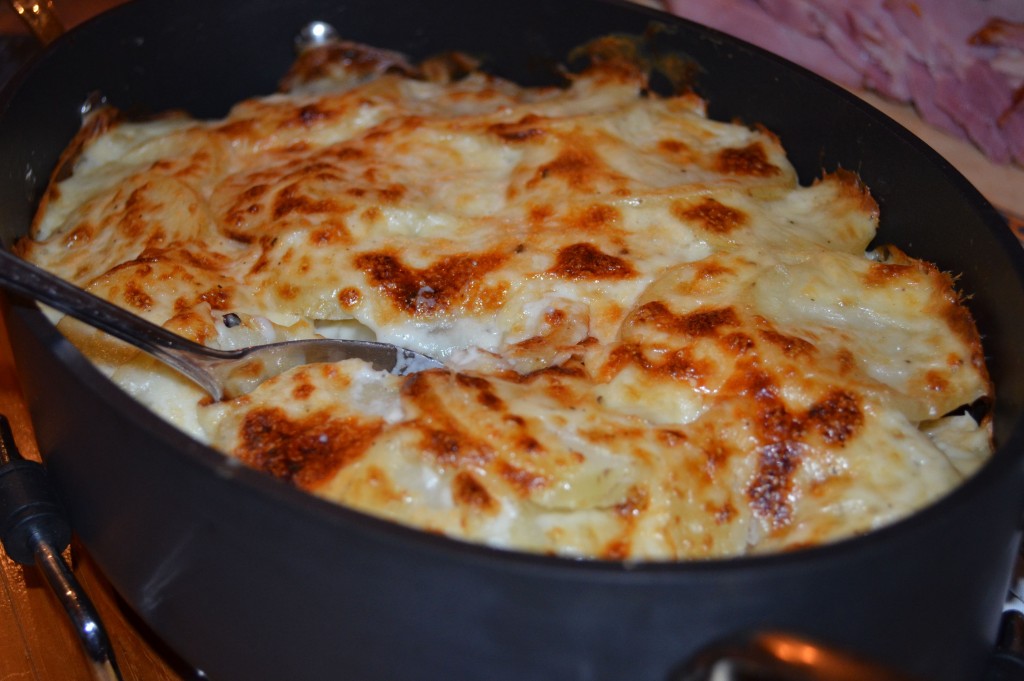
What to go with ham? Well, many of you who might have seen me on QVC or have read my cookbook (Blue Jean Chef: Comfortable in the Kitchen), might know about my love of potato gratin. I love potato gratin and it’s a perfect match to ham. But… since the ham was already pretty decadent with respect to diet, I decided to be a little more sensible for this meal and went for some Old-School Scalloped Potatoes. Scalloped potatoes use milk instead of luscious cream, and so make a more sensible choice without really sacrificing delicious flavor.

The nice thing about this meal is that most of it is done ahead of time and you’re just left waiting for things to finish in the oven. Pop the potatoes into the oven while the ham rests on the counter. Add a green vegetable and perhaps a beautiful salad and you’re set with a tasty and memorable holiday meal.

Madeira Orange Baked Ham

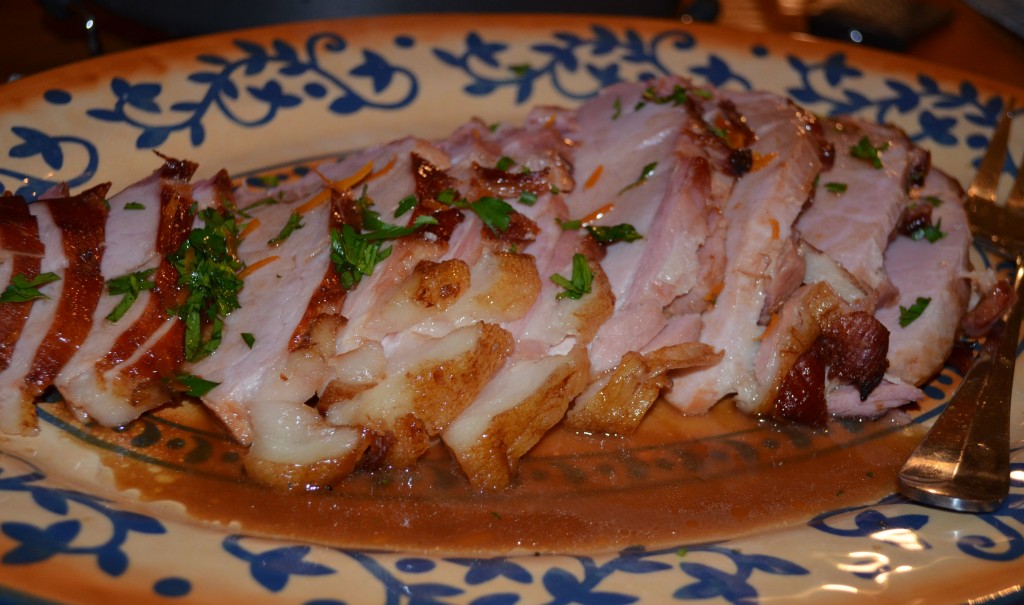
slices of ham on a platter with parsley on top and jus on the platter

Serves 6

Ingredients:

  • 1½ cups Madeira Wine
  • ½ cup brown sugar
  • ¼ cup maple syrup
  • ¼ cup freshly squeezed orange juice
  • ¼ cup Dijon mustard
  • 1 tablespoon orange zest
  • 4 pound bone-in ham
  • 1 orange, sliced
  • whole cloves

Directions:

  1. Pre-heat the oven to 350ºF.
  2. Combine the Madeira, brown sugar, maple syrup, orange juice, Dijon mustard and orange zest in a small saucepan. Bring to a boil and then immediately turn off the heat. (Pay attention. You don’t want this to boil over.)
  3. ham ready for the oven in a ceramic roasting dish with orange slices attached with whole clovesScore the ham with crosshatch marks and place in a 9-inch x 13-inch roasting pan. Pour the glaze over the top and then nail orange slices to the ham, using whole cloves.
  4. Transfer the ham to the oven and bake for about 1 hour, or until an instant-read thermometer reads 140ºF, basting a few times while it bakes.
  5. Remove the ham from the oven and set on the counter to rest. Serve sliced with the jus at the table.


Old-School Scalloped Potatoes

nicely browned scalloped potatoes in hard anodized oval pan with spoon

Serves 6

Ingredients:

  • 3 tablespoons butter
  • 3 tablespoons all-purpose flour
  • 3 cups milk
  • 1 large clove garlic, peeled and smashed.
  • 1 teaspoon salt
  • freshly ground black pepper
  • pinch ground nutmeg
  • 6 to 7 medium potatoes, sliced ¼-inch (Yukon Gold are perfect)
  • ½ cup chopped onion
  • 1 to 1-1/2 cups grated Parmesan cheese

Directions:

  1. Pre-heat the oven to 375ºF.
  2. Heat a small saucepan over medium heat. Add the butter and melt. Add the flour and whisk with the butter, cooking for about 2 minutes. Add the milk, stirring constantly and bring the mixture to a boil. Add the smashed garlic clove and let the sauce simmer for 5 to 10 minutes. Season with salt, freshly ground black pepper and ground nutmeg.
  3. Spread out one third of the potato slices in a 3-quart casserole pan. Sprinkle half the chopped onion on top and pour one third of the sauce over the vegetables. Sprinkle with one third of the Parmesan cheese. Repeat these layers, finishing with a layer of potatoes, sauce and cheese.
  4. Bake in the 375ºF oven, covered for 45 minutes. Remove the cover and continue to cook for 15 minutes. The potatoes should be bubbling and lightly browned on top. Serve to happy friends.


Nov 142011
 

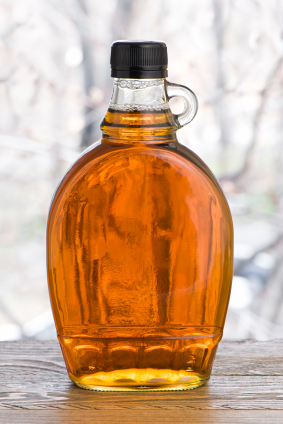
photography by Daniel Loiselle

A dear friend of mine will turn 40 in a couple of weeks. In her younger (should I say wilder, crazier) days, she would drink shots of maple syrup. She said that a shot of maple syrup was like an “apple a day”. I don’t know if she was right about that (although, come to think of it, she didn’t see many doctors in those days), but I do know she had one thing right - she only ever drank pure maple syrup. She knew what she was doing - she was from Vermont, after all.

Being Canadian, I have to agree and fully condone the intake of only pure maple syrup over all artificial forms. I’m not saying that the impostors known as pancake syrups don’t have a place in this world, but they definitely should not be confused with pure maple syrup. They are flavored with a maple flavoring, but in large part are made of high fructose corn syrup. What does that have to do with the sap from a maple tree?

That’s exactly what maple syrup is - the xylem sap from the sugar maple, red or black maple trees. These trees store starch in their trunk and roots in the cold weather, and as the weather warms in the spring, this starch is converted to sugar and rises in the sap of the trees. The trees are tapped to extrude the sap, at which point it does not resemble what we know as maple syrup. It has to be boiled and the water evaporated in order to concentrate the sap into what we lovingly pour all over our pancakes. In fact, it takes 20 - 50 liters of sap to make just 1 liter of maple syrup. Hence, pure maple syrup comes along with a high price tag, which makes it tough to grab the pure maple syrup off the grocery store shelf over the cheaper artificial versions sitting right beside, but it truly is worth it! In the same way that real Parmesan cheese is far better than the version of “cheese” that comes in a green can, the flavor of pure maple syrup is leaps and bounds above pancake syrup. Just ask those who know - the Quebecois. The province of Quebec makes 75% of the world’s maple syrup and the Quebecois refer to artificial syrup as “sirup de poteau” or “pole syrup”, implying that it was acquired by tapping a telephone pole! Saucy folk, those Quebecois!

Maple Syrup is one of very few genuinely North American agricultural products not introduced by Europeans, and in Canada, as in Vermont, New York, Maine, New Hampshire, and other states that produce maple syrup, it is taken seriously. In these places, people care not just about whether the syrup is pure or not, but also about the grades of maple syrup they use. Lighter versions, like Canada#1 Extra Light (AA), Canada #1 Light (A), or USA Grade A Light Amber (fancy) are used at the table, but don’t have a strong maple flavor. True lovers of maple syrup will pride themselves in using Canada #1 Medium (B) or even Canada #2 Amber (C), USA Grade A Medium Amber or Dark Amber. Then there are even darker grades of syrup, like Canada #2 Dark (D) or USA Grade B, but these are generally used in cooking and baking.

Speaking of cooking and baking, maple syrup is a good substitute for sugar in many applications. It is about three times as sweet as sugar, so when substituting, use 3/4 cup of maple syrup for every 1 cup of sugar. If baking, you’ll also want to reduce the largest quantity of liquid in the recipe by 3 tablespoons for every cup of maple syrup used, and check your finished product a little sooner since maple syrup browns quickly. It may sound complicated at first, but it really isn’t. I particularly like the sweet flavor that maple syrup imparts to foods. It is sweet, but it seems to me to be a “smoother sweet” than that of refined granulated sugar.

Here are a couple of recipes that use maple syrup. The first is a vegetarian chili recipe that combines the spice of jalapeño, cayenne pepper and chili powder with the sweetness of maple syrup. This is a feel-good chili that leaves you feeling satiated without feeling like you need to lie down for a while.

The second recipe is a favorite dessert of mine. It’s name, Pudding Chomeur, comes from the Quebecois word for ‘unemployed’. In the land where maple syrup was plentiful and not expensive, this was a dessert that could be whipped up for very little and believe me, a little goes a LONG way! I’ve tried several different versions of Pudding Chomeur, but this is my favorite so far. Credit goes to Gourmet Magazine who adapted this recipe from a very well known restaurant in Montreal called “Au Pied du Cochon”. Try this one - delicious!

Maple syrup should be a staple pantry item in everyone’s kitchen. Incorporate it wherever you think you’d like a little sweet flavor - a smooth sweet flavor. You’ll be surprised at the number of places you can enjoy its flavor. Once you’ve converted to the faithful of those who believe in using only pure maple syrup, you might even enjoy it in a shot glass!

Vegetable Chili with Maple Syrup

Serves 4 - 6

Bowl of colorful chili in brown bowl with spoon. Dollop of sour cream on top.

Ingredients:

  • 1 tablespoon olive oil
  • ½ cup chopped onion
  • 2 cloves garlic, minced
  • 2 carrots, sliced ¼-inch thick
  • 1 red pepper, chopped
  • 1 yellow pepper, chopped
  • 1 green pepper, chopped
  • 1 jalapeno pepper, chopped
  • 1 zucchini, chopped
  • 1 yellow squash, chopped
  • 4 ounces button mushrooms, quartered
  • 2 tablespoons chili powder
  • 1 tablespoon ground paprika
  • ½ teaspoon dried oregano
  • ½ teaspoon ground cinnamon
  • 1 teaspoon salt
  • pinch – ¼ teaspoon cayenne pepper (depending on how spicy you’d like it)
  • pinch ground cloves
  • 1 28-ounce can whole plum tomatoes, diced or crushed by hand
  • 2 tablespoons maple syrup
  • 1½ cup chickpeas, cooked or canned
  • 1½ cup red kidney beans, cooked or canned
  • chopped fresh cilantro (or parsley)
  • sour cream (optional)
  • Cheddar cheese, grated (optional)

Directions:

  1. Heat a large Dutch oven over medium-high heat. Add the olive oil and sauté the onion, garlic, carrots, peppers for 8 minutes. Add the zucchini, yellow squash and mushrooms and continue to cook for another 6 minutes.
  2. Add the oregano, cinnamon, paprika, chili powder, ground cloves and cayenne and stir to mix well, continuing to cook for another minute or two.
  3. Add the tomatoes and maple syrup and bring everything to a simmer. Cook over medium-low heat for 35 minutes, or until all the vegetables are tender.
  4. Stir in the beans and simmer for another 10 minutes. Then season with salt and more cayenne pepper if desired.
  5. Garnish with cilantro (or parsley if preferred) and serve with a dollop of sour cream and some grated Cheddar cheese.


Pudding Chomeur

Serves 6
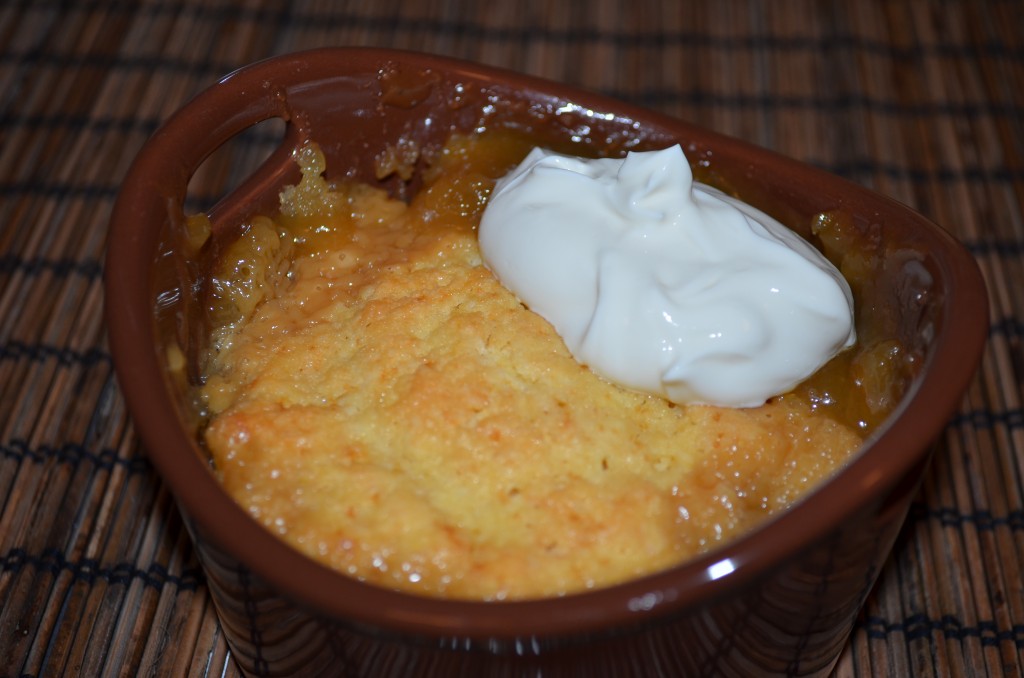
Close up shot of baked pudding in brown ramekin with dollop of sour cream

Ingredients:

  • 1 cup pure maple syrup
  • ¾ cup heavy cream
  • 2 teaspoons cider vinegar
  • pinch of salt
  • 6 tablespoons butter
  • 1/3 cup granulated sugar
  • 1 egg
  • ½ teaspoon pure vanilla extract
  • 1 cup cake flour
  • 1 teaspoon baking powder
  • ¼ teaspoon salt
  • sour cream (optional)

Directions:

  1. Preheat the oven to 350º F.
  2. Combine the maple syrup, heavy cream, cider vinegar and salt in a small saucepan and bring to a boil. Remove from the heat.
  3. Cream the butter and sugar together with an electric mixer until light and fluffy. Add the egg and vanilla extract and beat until just combined.
  4. Add the flour, baking powder and salt and mix until just combined (the batter will be thick).
  5. Pour 1/3 cup of the maple syrup mixture into a 9-inch square cake pan. Divide the batter into 6 mounds and place them in the cake pan, spaced evenly. Pour the remaining maple syrup mixture over and around the mounds.
  6. Bake for 25 to 30 minutes or until the top is golden and firm to the touch. Serve warm with a dollop of sour cream.

 

Oct 302011
 

It’s that time of year. The time of year when I start planning my Thanksgiving meal (my second Thanksgiving meal that is, since Canada’s Thanksgiving was almost a month ago and I get to enjoy both!). Yes, I’ll probably have turkey and yes, I’ll probably brine it. That’s a given. To me, the most interesting and exciting parts of Thanksgiving are the side dishes that go along with the turkey. So, at this time of year, I start experimenting with different Thanksgiving-appropriate vegetables. This week, I think I’ve not only hit on a winner for my Thanksgiving meal, but I’ve decided this is my new favorite winter squash - delicata squash.

Now, for those of you who don’t know me well, that is quite a statement for me to make. My mother probably just fell over! I have never been a lover of squash. In fact, pumpkin can send me into hiding for weeks. However, I’ve grown up and forced myself to embrace squash (I still haven’t quite conquered pumpkin, but I haven’t given up).

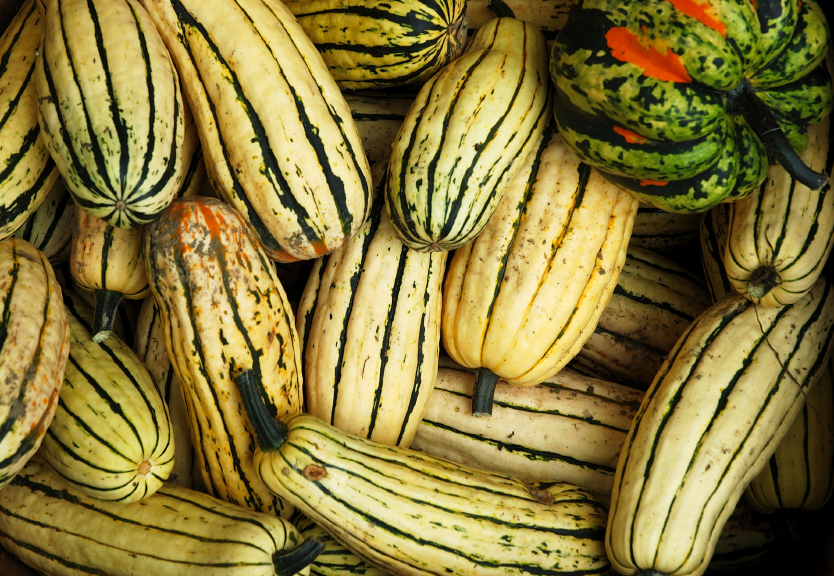
a display of delicata squash as a farmers' market

Delicata squash is a lovely pale yellow or cream colored oblong squash with dark green vertical stripes. It ranges from about 5 to 9 inches in length and is usually about 3 inches in diameter. One squash will feed two people easily. Winter squash and summer squash are both available year round. They differ in that winter squash are harvested and eaten when the squash has reached the fully mature fruit stage - the seeds have fully matured and the skin has hardened - while summer squash are harvested when still immature with softer skins and seeds. Winter squash became known as “winter squash” because they can be stored longer than summer squash. They are better “keepers” and can be stored into the winter months.

Now, delicata squash does not keep quite as long as most winter squashes, but how many of us are storing vegetables for months? What I really like about delicata squash is the fact that you don’t have to peel it. The skin is edible and really quite enjoyable. Butternut squash has been popular over the years, but peeling and chopping butternut squash makes it more work in the prep stage and deters many cooks. With delicata squash, you simply cut it into rings or wedges, removing the seeds one way or another and then roast, sauté, steam, or even microwave it.

Here are a couple of recipes to get you started with this fabulous and easy-to-prepare squash. The first is very simple and shows off the flavor of the delicata squash. The second is a little sweeter, but oh so tasty! Whether you’re a fan of the savory or the sweet, one of these recipes is sure to become a favorite of yours!

rings of roasted delicate squash on a white oval plateSimply Roasted Delicata Squash

Serves 4

Ingredients:

2 delicata squash

1 tablespoon olive oil

1 teaspoon chopped fresh thyme

1/4 teaspoon salt

freshly ground black pepper

Directions:

  1. Pre-heat the oven to 400º F.
  2. Starting at the more rounded end of the squash, cut the squash into horizontal slices, about 3/4-inch thick. When you can see the seeds inside, scrape out the seeds with a teaspoon. Then, continue to slice the squash into rings.
  3. Toss the rings of squash with olive oil, thyme, salt and pepper and spread out onto a baking sheet in one layer.
  4. Roast at 400º F for 20 – 25 minutes, or until tender, turning the rings once during cooking.


Wedges of roasted delicate squash with parsleyMaple Roasted Delicata Squash

Serves 4

Ingredients:

2 delicata squash

2 tablespoons butter

2 tablespoons maple syrup

1/8 teaspoon ground cinnamon

1/4 teaspoon salt

freshly ground black pepper

2 tablespoons chopped fresh parsley

Directions:

  1. Pre-heat the oven to 400º F.
  2. Cut the squash in half lengthwise and remove the seeds with a teaspoon. Then, cut each half into about 2 or 3 wedges.
  3. Melt the butter in a small saucepan and mix with the maple syrup and cinnamon.
  4. Spread the squash out on a baking sheet in one layer and brush each wedge with the butter and maple syrup mix. Season with the salt and freshly ground black pepper.
  5. Roast at 400º F for 25 minutes, or until tender. Remove from the oven and sprinkle with parsley.


Sep 252011
 

Whenever it rains, I think about all the places that I’ve lived before my current home. It seems all the apartments that I’ve rented over the years had one thing in common - every time the skies opened up and poured rain, my ceilings would start to weep (sometimes sob!) and I’d run around trying to catch those teardrops in buckets everywhere. These days when it rains, I do still glance up cautiously at my ceiling, but instead of panicking and worrying about damage, I feel grateful that my roof doesn’t leak and I’m safe and sound and dry inside.

It’s been raining a lot these past few weeks. Indeed, Hurricane Irene made it rain harder than I’ve ever seen it rain before in my lifetime. Hurricane Irene is behind us now, but she left paths of destruction in her wake, and one of those paths really battered the tomato crop in the Northeast. Fortunately for most of us, California and Florida are the nation’s biggest producers of tomatoes, but growers in Virginia, North Carolina, New Jersey, and New York all suffered damage to their heirloom tomatoes and many crops were lost. Consequently, in my part of the country, farmers’ markets are not filled with tomatoes as plentifully as they normally would be at this time of the year. The local tomatoes are scarce.

And so… as the tomato season comes to a close in this rainy September, I’m also grateful for the heirloom tomatoes that I can enjoy. Here’s a simple and quick way to really enjoy the end of the tomato season:

Easy Tomato Bruschetta

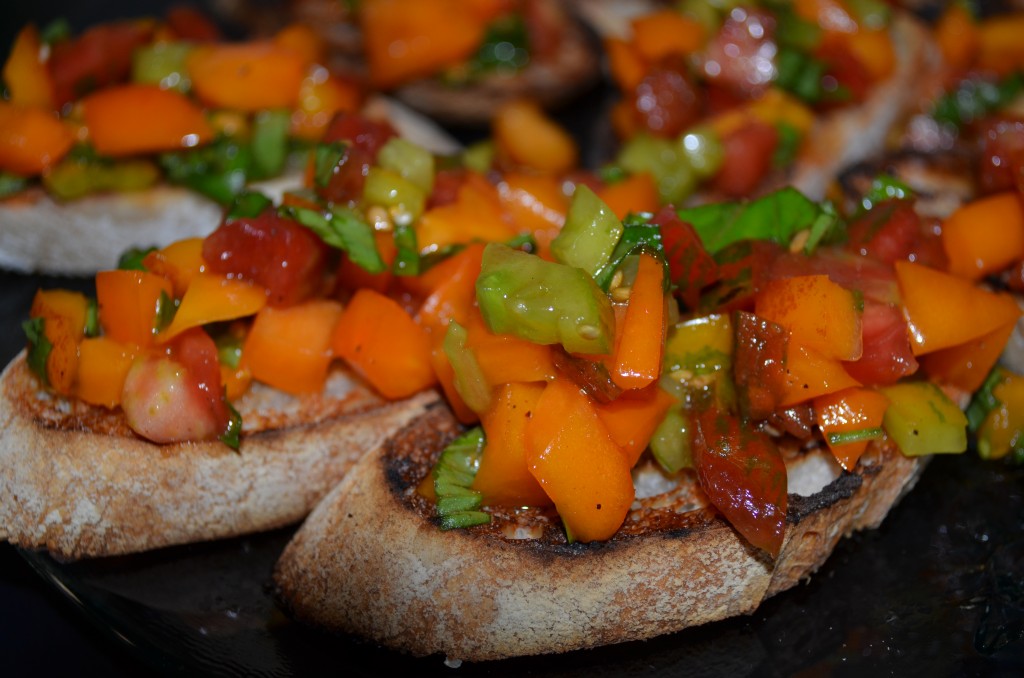
Colorful red, yellow and green tomatoes on toasted baguette

Ingredients:
1 baguette
olive oil
1 clove garlic, peeled and left whole
4 heirloom tomatoes
1 tablespoon balsamic or red wine vinegar
2 tablespoons extra virgin olive oil
½ teaspoon salt
freshly ground black pepper
20 leaves fresh basil, thinly sliced

Directions:
1. Pre-heat the oven to 350º F.
2. Slice the baguette into ½-inch slices on the bias, and place on a cookie sheet. Brush the bread slices with the olive oil and toast in the oven until lightly browned – about 20 minutes. Alternately, grill the slices of baguette on your outdoor grill.
3. While the bread is toasting, prepare the tomato mixture. Chop the tomatoes and place in a bowl. Add the vinegar, olive oil, salt and pepper.
4. Once out of the oven and as soon as you can handle the crostini, rub the garlic clove very lightly on each one.
5. Top each crostini with some of the tomato mixture. Place on a platter, and sprinkle the shredded fresh basil over the top.

Sep 192011
 

Everyone has a favorite grain, don’t they? Well, perhaps not, but I always have favorite foods that I can’t get enough of… until I move on to something else. Lately I’ve been feeling a little fickle with my grains. Rice has tried to stay on the top of my list, luring me with the wonderful smell of a freshly made pot of Basmati. My morning steel cut oats are still making a run for the lead position in my heart, and even quinoa tried to get in the mix. Still, I have chosen a new “best grain” and it’s neither rice, nor oats, nor quinoa. It’s farro.

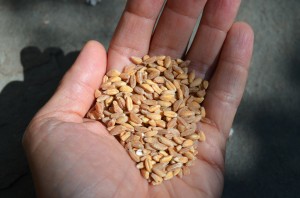
Farro held in the palm of someone's left hand.

Farro - the most ancient grain.

I remember when I first tasted farro, years ago as a cook at Zuni Café in San Francisco. Since then, however, farro and I have not crossed paths too often. This summer we were reunited and I think this time the relationship is going to last. First things first - what is farro?

Believe it or not, there’s quite a debate about what farro actually is (emmer, einkorn, spelt), but it is generally accepted that farro is the world’s most ancient grain - the grain from which all other grains are derived. That’s sort of cool in and of itself, but there’s so much more about farro to like. It’s a whole grain, with the bran intact and consequently has a lovely nutty flavor. It is also a very nutritious grain. Farro is a great source of complex carbohydrates and while it is an ancient form of wheat, it has more than twice the fiber and protein of modern wheat. So why have we not seen farro hanging out in our supermarkets? Well, farro is not a high-yielding crop. In fact, a field of farro only yields about a sixth of what a similar field of wheat will yield. It was a staple ration of the Roman legions, but after the fall of the Roman empire, other higher-yielding grains were developed and took over. Farro fell by the wayside. But, farro didn’t disappear completely and has been popular in Italy and France for quite some time. Though it’s not a standard grocery store item in the USA yet, you can find farro at high-end groceries, specialty stores or even online (amazon.com).

When it comes right down to it, farro is a grain with a fancy reputation, but is cooked just like any other grain - it is boiled in water (or other liquid) until soft(er). Simple. Easy. And delicious. Farro works well in soups, stews, as a cold salad, but my favorite preparation of farro is in a farrotto - just like a risotto, but made with farro instead of rice. When I compare a farotto to a risotto, farro emerges as the winner for a couple of reasons. A farrotto is easier to cook than risotto - just boil it in the liquid until done to your liking and then stir in other cooked vegetables or ingredients. Risotto, on the other hand, requires a gradual adding of liquid and diligent attention, stirring regularly. Farro is practically impossible to overcook, whereas you can easily overcook risotto resulting in a gloppy mess. Farro feels healthier and less rich than risotto. I expect this is mostly because I omit the cheese at the end of cooking a farrotto that I always add to risotto, but regardless, it’s a healthy grain and you feel healthy when you eat it. Finally, farrottos are a great way for me to incorporate all those summer vegetables that were abundant the last couple of months. It was the base for many lovely delicious vegetarian summer meals.

You may not have a favorite grain, but here’s the good news… I’m willing to share! Give farro a chance!

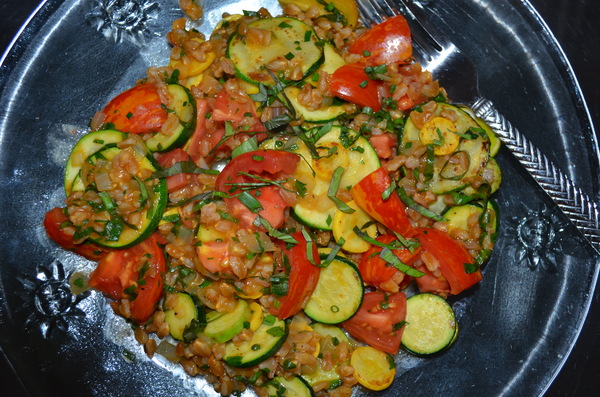
farrotto on a glass plate with zucchini and tomatoes

Farrotto with zucchini, tomatoes and basil.

Basic Farrotto
Ingredients:
2 tablespoons olive oil
1/2 onion, chopped
1 cup farro
4 cups vegetable stock
salt and freshly ground black pepper

Directions:
1. Heat a large sauté pan or Dutch oven on medium to medium-high heat. Add the olive oil and cook the onion until translucent and tender - about 6 to 8 minutes.
2. Add the farro and stir well, cooking for a minute or two. Add the vegetable stock and bring to a simmer. Simmer the farro for 45 minutes, or until tender. (Don’t expect the farro to become really soft - farro should always have some bite and chewiness to it.) If the liquid reduces and disappears before the farro is tender to your liking, simply add water and continue to cook until it is tender.
3. At this stage, remove the farro from the stovetop and stir in cooked vegetables and fresh herbs (see suggestions below) to finish the farrotto, or store the farrotto base in containers in the fridge or freezer until you’re ready to use it.

Farrotto Suggestions:
- Zucchini, tomatoes, parsley, chives and basil
- Mushrooms, peas and mint
- Butternut squash, apple and sage